
For most families, the hardest part of location sharing isn't the technology — it's the conversation. Parents often worry about how to bring it up without sounding like they don't trust their child, while kids sometimes assume any tracking talk means their independence is about to shrink. The good news: when the conversation happens early, honestly, and as a two-way agreement, location sharing tends to feel less like a rule and more like something the whole family does together.
Here's how to approach it in a way that builds trust instead of eroding it.
Why the Conversation Matters More Than the App
Whatever tool a family chooses, the technology itself is neutral. What shapes how a child experiences it is whether they understood why it exists, agreed to it, and know they can talk about it openly. A location-sharing setup a child discovers on their own — without ever being told — can feel like an invasion of privacy, even if the parent's intentions were purely protective. The same feature, introduced through an honest conversation, tends to feel like part of how the family looks out for each other.
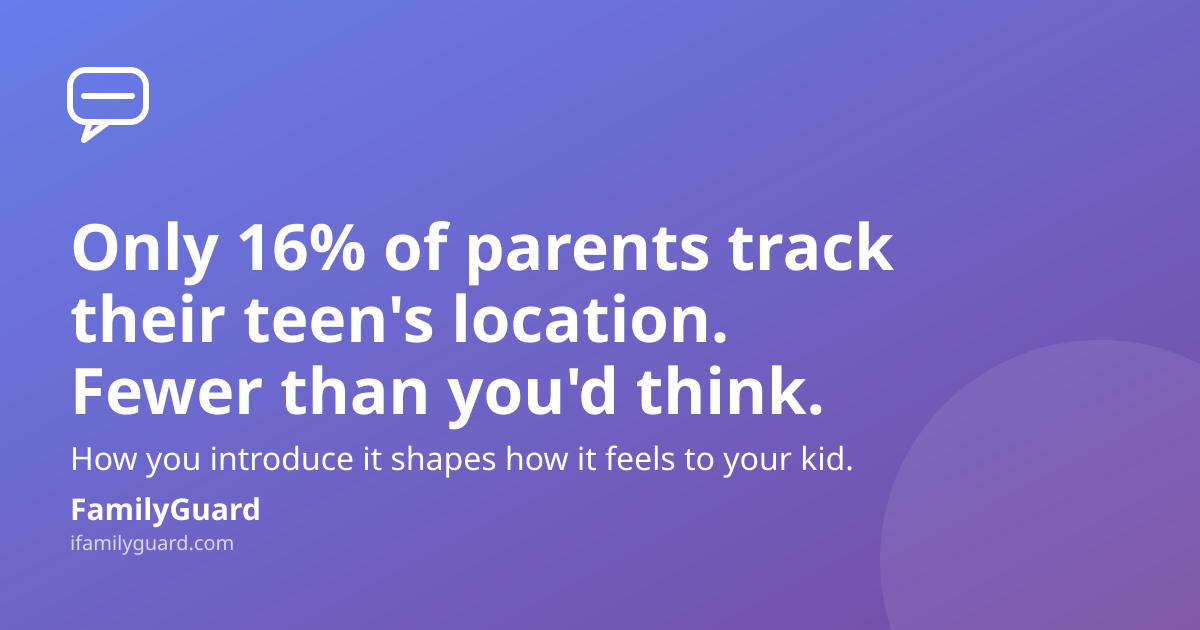
According to Pew Research Center, only 16% of parents report using location-tracking tools on their teen's phone, making it one of the less common digital parenting strategies compared to things like setting screen-time limits or reviewing browsing history. That relatively low number is a useful reminder: location sharing isn't the default, so introducing it thoughtfully — rather than assuming it's expected — genuinely matters to how it lands.
Choosing the Right Moment to Talk
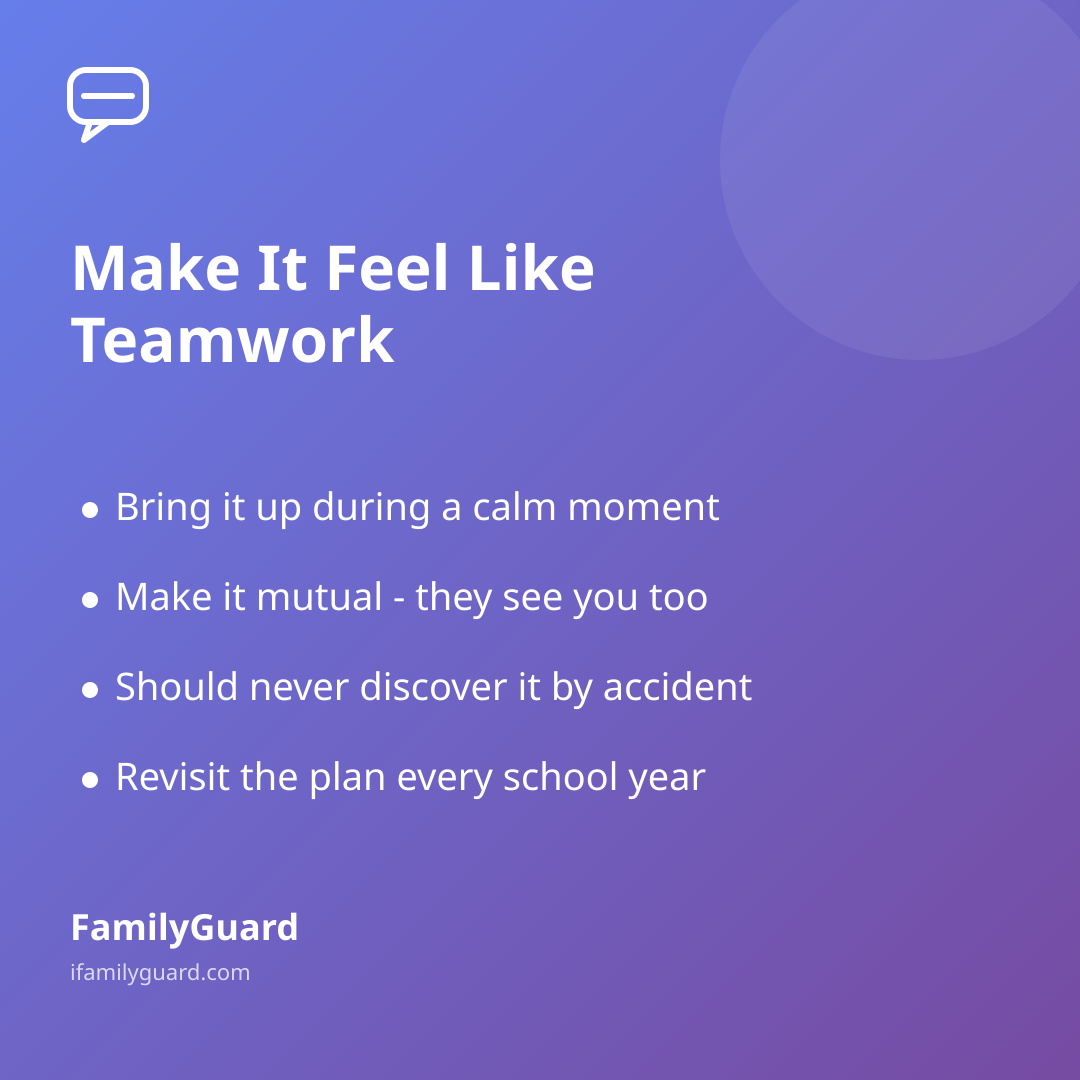
Timing changes everything. Bringing up location sharing in the middle of an argument, or right after a scary news story, tends to frame it as a punishment or a reaction to fear. Instead, try to introduce it during a calm, unrelated moment — a car ride, a walk, or while setting up a new phone together.
Good natural entry points include:
- Getting your child their first phone or device
- Starting a new school, activity, or a period of more independent travel
- Planning a trip, sleepover, or time apart as a family
- A simple check-in conversation about how everyone stays in touch
Framing it around a life change — not a specific worry about your child's behavior — keeps the tone collaborative rather than suspicious.
What to Say, by Age
The words that work well shift as kids grow. A few starting points:
- Younger children (around 6-10): Keep it simple and concrete. "This app is how we can find each other if we get separated at the store, or if you need help. I can see where you are, and you can see where I am too."
- Tweens (around 11-13): Bring in the mutual angle. "Let's set this up together — you'll be able to see my location too, and we can both check in with a tap instead of texting 'where are you' all the time."
- Teens: Invite negotiation. "I'd like us to share location while you're building up more independence. Let's talk about what feels fair — maybe it's on for now and we revisit it in six months, or maybe it's just for certain situations like driving alone for the first time."
Across every age, the underlying message stays the same: this is about staying connected and being able to help each other quickly, not about watching over their shoulder.
Making It a Two-Way Street
One of the simplest ways to keep location sharing from feeling one-sided is to make it genuinely mutual. If your child can see your location too, it stops being something done to them and becomes something the family does together. This is also where being upfront about the setup matters — your child should know it's on, understand what it shows, and never discover it by accident.
This is the idea behind apps like FamilyGuard, which are built specifically around consent-based sharing within a family: everyone pairs in openly (often with a quick QR code scan), everyone can see who's sharing with whom, and nothing is hidden from the people involved. Features like one-tap SOS or smart-zone alerts for "arrived at school" or "left home" work best when they're something your child helped set up, not something imposed on them.
Revisiting the Conversation as They Grow
Location sharing shouldn't be a one-time decision that never gets discussed again. What feels reasonable for a ten-year-old walking to a friend's house is different from what feels reasonable for a sixteen-year-old with a driver's license. Building in regular, low-pressure check-ins — maybe every school year, or after a big milestone like getting a license or starting a job — keeps the arrangement current and shows your child that their growing independence is being recognized, not ignored.
A few questions worth revisiting together:
- Does the current setup still make sense for your child's age and routine?
- Are there specific situations (like a first solo trip) where sharing feels especially reassuring to both of you?
- Is there anything about it that feels uncomfortable or worth adjusting?
Letting your child raise concerns — and actually responding to them — reinforces that this is a shared agreement, not a fixed rule.
The Takeaway
Location sharing works best as an ongoing conversation, not a single announcement. When it starts with honesty, includes your child in the setup, and stays open to change as they grow, it tends to become just another quiet way your family stays connected — something that offers peace of mind for you and a real sense of togetherness for them.